Scott Adams is NOT on Team Reality

Cartoonist Scott Adams admitted the other day that the "anti-vaxxers"--meaning people who didn't want an experimental COVID shot--had "won." Like Emily "we were all in the dark" Oster, he chalked up his loss to bad luck instead of his own bad judgment. 


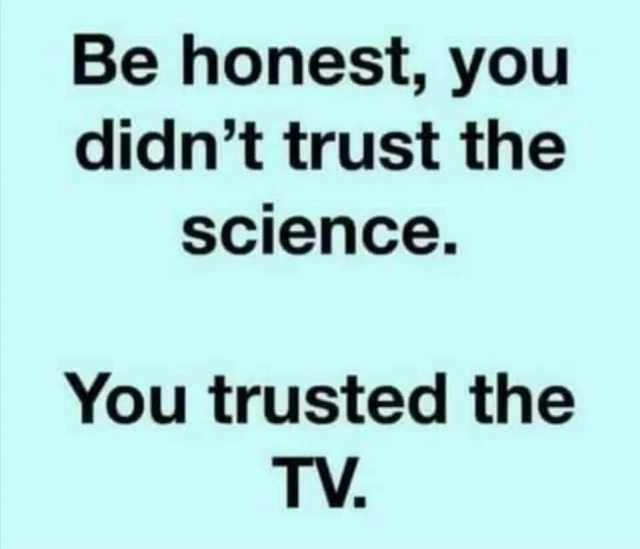
Sorry, Scott, but there's no substitute for doing your own research using primary sources and learning how to read those sources. It's like the first three rules from Joel Greenblatt's book You can be a Stock Market Genius:

  1. Do your own work.
  2. Don't trust anyone over 30.
  3. Don't trust anyone 30 or under. 

Get it? Sinking your fortune or your health into something you haven't carefully researched is risky. As for following the experts (under 30, over 30 or otherwise), these experts don't work for you, they don't suffer any consequences for being wrong, and renegades who pan a stock or pharmaceutical get excommunicated. 

Even though COVID dissidents were censored, information and lessons on interpretation were out there. Dr. Sebastian Rushworth's book COVID: Why Most of What you Know is Wrong explained, succinctly and in laymen's terms, scientific studies and statistics. Looking at Pfizer's own study, he called the number of severe adverse events "concerning" and observed that Pfizer didn't say what those events were. And--the book is from 2021--he noted, "none of these studies has looked into whether these vaccines prevent those who have been vaccinated from spreading the infection to others, so there is at present no data to support that claim." Dr. Rushworth was less concerned about the Moderna shot, but he was right about the rest simply by reading and interpreting the drug companies' own studies. All of this was presented in a way where you could check his work instead of taking him on faith.

Maybe not many people saw that book. Fair enough--but every state had COVID dashboards where you could see the overwhelming majority of deaths were among the old and the metabolically unhealthy. Independent journalist Alex Berenson was on Twitter and then Substack reporting on the shots; nurse John Campbell, Dr. Suneel Dhand, Dr. Vinay Prasad, biologists Brett Weinstein and Heather Heying and others were on YouTube interpreting COVID studies and news. For a while, YouTube had local TV news videos every day of people who'd suffered severe adverse reactions to the COVID shot. Plenty of information was out there for people willing to do their own work--or at least listen to others who had.

But there was something even more basic: the "vaccines" were novel, experimental-stage medical products created, tested and marketed by an industry with a spotty safety record. The people least insulated from disaster--the poor and least educated--were the most wary even if they couldn't explain why. 

To be fair to Scott Adams, there were people who more lucky than right. Some of them will take a loss when their child suffers or dies from an entirely preventable disease. But putting all of us in that category by calling us "anti-vaxxers" is intellectually dishonest and a disqualification for Team Reality.


UPDATE: 

Comments

Popular posts from this blog

Moving on to YouTube

Remember when the blogosphere was a wild ride? Doctors, writers and researchers dove into research, picked apart studies and stood up to official advice and conventional wisdom that didn't work. We found each other in the comments and made a community.  Along the way, Dr. T. Colin Campbell's research got exposed as shoddy by an English major, Tom Naughton made us laugh, "safe starch" fads made us scratch our heads, "Diabetes Warrior" Steve Cooksey almost went to jail, CarbSane trolled everyone who was anyone, and CarbSaneR trolled the troll.  Now it's very quiet. Blogs don't come up in Google search results anymore and even if they did, most of the bloggers have stopped writing.  That's why I've moved on to YouTube. Videos do come up in search results and my shorts--which are mostly what I make--get pushed out to hundreds of people or more. My videos are on food and health (biohacking), but also on growing things and fixing things. If you...

Palpitations Gone with Iron

Thanks to my internet friend Larcana, who alerted me to the connection between iron deficiency and palpitations, I doubled down on my iron supplements and, for good measure, washed them down with Emergen-C. It's a cold medicine with a mega-dose of vitamin C, plus B vitamins and minerals. I don't think vitamin C does anything for a cold (a friend bought the stuff and left it at my house the last time she visited), but vitamin C does help iron absorption. After doubling up on iron in the last three days, I feel back to normal. (I'd already been taking quite a bit of magnesium and potassium, so I probably had sufficient levels of those.) How did I get so low on iron? Maybe it was too many Quest bars instead of red meat when I had odd cravings during my dental infection recently. Maybe because it's too hard to find liver at the grocery store and I haven't eaten much of it lately. Maybe the antibiotics damaged my intestines . And apparently, I'm a heavy bleeder . ...

We Hate the ADA; Why does the Perfect Health Diet Get a Pass?

Some people keep touting the Perfect Health Diet as low-carb, but carb levels that are mostly in the triple digits aren't generally regarded as low-carb; in fact, one of the authors says low-carb diets are unhealthy. A lot of us hate the  American Diabetes Association's advice for diabetics: start with 45g to 60g of carbohydrate per meal and go higher or lower from there. That's 135g to 180g of carb. Perfect Health Diet advice for diabetics: eat 20% to 30% of your diet as carbohydrate. On 2,000 calories, that's 100g to 150g of carb. On 1,700 calories, that's 85 to 128g; on 2,200 calories, that's 112 to 168g. Depending on your carb and calorie intake, carbs would be 85g to 168g per day. That's not a mile off from the ADA's recommendations. Paul Jaminet, one of the authors of the Perfect Health Diet, says, "the basic biology here is that the body's physiology is optimized for a carbohydrate intake of about 30%." He warns against a ...

Not Only Cheaper, But Easier

A while back, I wrote about saving money on break time coffee and snacks. I haven't done very well putting it into practice. But a post by James Clear today got me thinking about it again: Warren Buffett uses a two-list system to prioritize things. Check it out --and follow the instructions. Using Buffett's two-list system, two of the goals I ended up with were taking care of myself and saving $400 more per month than I already am. As I said, I've been wanting to save money, and the system made me really focus on this. I came up with 11 money-saving ideas, six of which had to do with food. Buying hamburger in bulk. Ranch Foods Direct sells one-pound packages of 80% lean pastured ground beef in bundles of 20 for a lot less than Whole Foods. Sprouts only carries super-lean beef that's grass-fed, and it's more expensive, too.  Not driving to Whole Foods. Whole Foods is out of my way, and saving a weekly trip saves gas. Coffee at home, tea at work. Tea is fr...

Doing Old-School Atkins

Last time I wrote about getting jittery and having a rapid heartbeat on VLC (very low carb). I cut way back on nuts a few weeks ago and felt remarkably better: more energy, and I can tell I lost a little weight because of the way my shoes and watchband fit. As I mentioned, taking a potassium pill helps the jitters and rapid heartbeat, and if it gets really bad, I can just eat a candy bar (we don't have safe starches at work). So for the first time, I tried Atkins induction. Why Atkins induction? It started with shorts. I'd been shopping for shorts and everything was very short (think Officer Jim Dangle on Reno 911 ), wildly patterned, ridiculous (where do you wear lace shorts if you're not starring in a Korean drama?) or knee length. There was even a high-waisted, pleated, acid washed pair from circa 1985. So when I saw a gray pair with sailor pant buttons, I bought them--even though they were pretty short (but not tight). Think Officer Dangle again. Being conscious of wea...