
Enjoying DIY Health and Projects

It's been a tough year and a half for most of us, but I've been taking advantage of the things available to us in 2021. DIY health, LED lights and modern home improvement tools have improved my life this year. 

The main thing has been DIY health. As many readers know, trying to get necessary labs from doctors can make you feel like Oliver Twist: "Please, sir, may I have some proper health care?" Being more irreverent and more of a do-it-yourselfer, I've ordered my own labs (allowed here in freewheelin' Indiana), researched my own care, and experimented with hormones ordered online. I've also been a member of Dr. Davis's Inner Circle group and found it invaluable. The L. reuteri/B. coagulans yogurt in particular has been helpful. It has been a bumpy ride, but my last thyroid panel came back normal. Normal--on no medications! My free T3 and free T4 are in the middle of the reference range. TSH is above program ideal at 2.4, but I'm not tired, I'm not gaining weight, there's no pressure behind my eyes, and I haven't been sick. 

I also haven't felt like someone ran me over after a few hours' work on the house. Last year's garage rehab went slowly for that reason. This year's project (fixing the cracked bathroom ceiling and replacing the fan and light) has gone slowly only because of some retrofitting difficulties and my lack of experience cutting lath and plaster and working with drywall. 

The scope of the ceiling project came to include replacing the fan after I dropped it and broke it. No problem, I thought, I'll find replacement parts. Then I saw how rusted the housing was.


Since the ceiling problem was probably from too much moisture, the fan was probably undersized, anyway. The cracks go through several layers of paint. Probably, previous owners painted over the cracks that kept appearing. 

No problem, I thought, I'll just put another fan in. So I bought sleek new fan with an LED light and nightlight, unboxed it, and found the exhaust was on the left. The old exhaust was on the right, and a ceiling joist blocked the path from left to right.

Exhaust tube (not shown) is to the right of the joist. 

Now this was a problem. I went out and bought a different fan with a right exhaust, but it looked cheap and flimsy and I didn't want to redo this project anytime soon. It was also too large for the opening, so I'd have had to retrofit it anyway. Back it went.

No problem, I thought. I'll cut the lath and plaster with a jigsaw and the joists with the sawzall. An employee at the hardware store said that the lath could be hard when he sold me some saw blades. He wasn't kidding--even the sawzall with the pruning blade wouldn't cut one of them. A landlord friend suggesting hand sawing, and that worked: the power saws were vibrating the loose wood instead of cutting it. Now I just had to figure out how to mount a fan into a gaping hole. Thanks to the misleading instructions that came with the fan, I went to a lot more trouble than necessary, but it got done. I connected the exhaust using a flexible extension bent 90 degrees, hooked up the wires with the help of a multimeter (the old tags in the picture are completely faded), stuffed them all in the J-box and called it a weekend.

Cutting the plaster with a saw created lots of fine dust, so I put on a cloth mask I made at the beginning of the pandemic. It's two layers of an old t-shirt. 


The mask allowed so much plaster dust in that I was coughing. It turned my snot gray. It wasn't loose (it fits better than my other masks) and there aren't any significant gaps. But it let in dust, and I think we can safely say, aerosols and viruses. 

No problem--I remembered I had a respirator. 

But there was the problem of a big gap in the ceiling and no way to put any backing in to support a piece of drywall. Today, though, I found out about drywall clips. They make ingenious use of failure: after you clip them on the the edge of the drywall you need to repair, you run a screw through the wall and into a mesh that's weak enough to fail but strong enough to hold the screw in place. Then you add your drywall piece and screw it in the same way. (The mesh is in the back, and large enough that you don't have to drill the screw in precisely the right spot.) Finally, you move the clips back and forth until they fail in fatigue. (See a video on them here if you're interested.)

I used the rest of the epoxy from last year to fill a couple of big gaps. I'm almost finished.
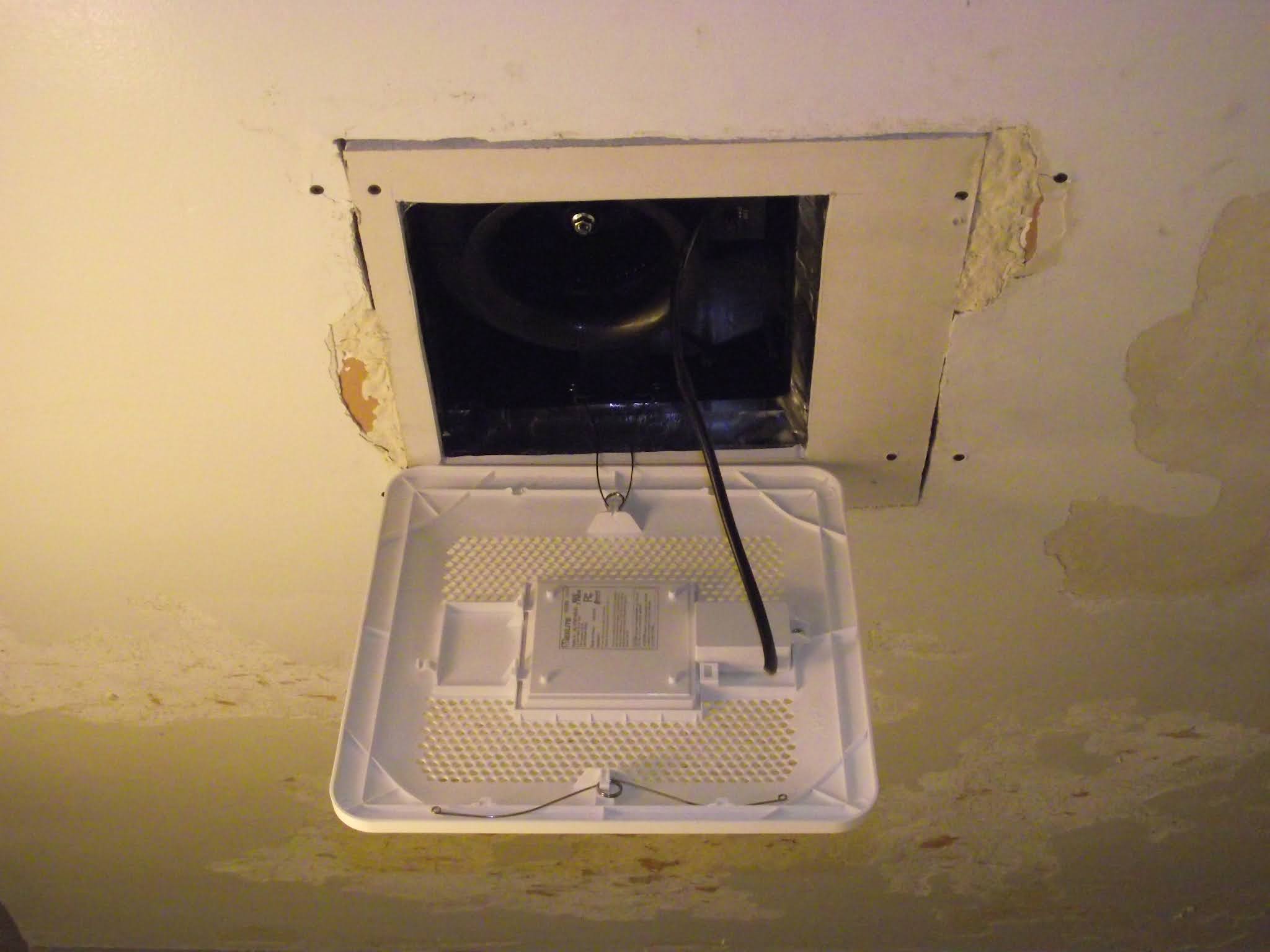
No rust! Much quieter, too! The grill attaches with two clever spring clips. The main LED light uses only 10 Watts.  

Night light on. Abatron epoxy at the top right--expensive, but strong and easy to work with. 

Even though I've had to look up at the ceiling a lot, my neck doesn't hurt. (I credit the B. coagulans in the yogurt.) 

Next weekend when the epoxy has set up, I hope to finish the plaster work and get the ceiling ready to paint. When it's done, I can finally enjoy the bottle of Bordeaux wine I bought for the occasion.

Comments

"When it's done, I can finally enjoy the bottle of Bordeaux wine I bought for the occasion."

... and it will be thoroughly deserved :)

All the best Jan
Lori Miller said…
Thanks, Jan! I'm looking forward to it!

Popular posts from this blog

Moving on to YouTube

Remember when the blogosphere was a wild ride? Doctors, writers and researchers dove into research, picked apart studies and stood up to official advice and conventional wisdom that didn't work. We found each other in the comments and made a community.  Along the way, Dr. T. Colin Campbell's research got exposed as shoddy by an English major, Tom Naughton made us laugh, "safe starch" fads made us scratch our heads, "Diabetes Warrior" Steve Cooksey almost went to jail, CarbSane trolled everyone who was anyone, and CarbSaneR trolled the troll.  Now it's very quiet. Blogs don't come up in Google search results anymore and even if they did, most of the bloggers have stopped writing.  That's why I've moved on to YouTube. Videos do come up in search results and my shorts--which are mostly what I make--get pushed out to hundreds of people or more. My videos are on food and health (biohacking), but also on growing things and fixing things. If you...

We Hate the ADA; Why does the Perfect Health Diet Get a Pass?

Some people keep touting the Perfect Health Diet as low-carb, but carb levels that are mostly in the triple digits aren't generally regarded as low-carb; in fact, one of the authors says low-carb diets are unhealthy. A lot of us hate the  American Diabetes Association's advice for diabetics: start with 45g to 60g of carbohydrate per meal and go higher or lower from there. That's 135g to 180g of carb. Perfect Health Diet advice for diabetics: eat 20% to 30% of your diet as carbohydrate. On 2,000 calories, that's 100g to 150g of carb. On 1,700 calories, that's 85 to 128g; on 2,200 calories, that's 112 to 168g. Depending on your carb and calorie intake, carbs would be 85g to 168g per day. That's not a mile off from the ADA's recommendations. Paul Jaminet, one of the authors of the Perfect Health Diet, says, "the basic biology here is that the body's physiology is optimized for a carbohydrate intake of about 30%." He warns against a ...

Palpitations Gone with Iron

Thanks to my internet friend Larcana, who alerted me to the connection between iron deficiency and palpitations, I doubled down on my iron supplements and, for good measure, washed them down with Emergen-C. It's a cold medicine with a mega-dose of vitamin C, plus B vitamins and minerals. I don't think vitamin C does anything for a cold (a friend bought the stuff and left it at my house the last time she visited), but vitamin C does help iron absorption. After doubling up on iron in the last three days, I feel back to normal. (I'd already been taking quite a bit of magnesium and potassium, so I probably had sufficient levels of those.) How did I get so low on iron? Maybe it was too many Quest bars instead of red meat when I had odd cravings during my dental infection recently. Maybe because it's too hard to find liver at the grocery store and I haven't eaten much of it lately. Maybe the antibiotics damaged my intestines . And apparently, I'm a heavy bleeder . ...

Not Only Cheaper, But Easier

A while back, I wrote about saving money on break time coffee and snacks. I haven't done very well putting it into practice. But a post by James Clear today got me thinking about it again: Warren Buffett uses a two-list system to prioritize things. Check it out --and follow the instructions. Using Buffett's two-list system, two of the goals I ended up with were taking care of myself and saving $400 more per month than I already am. As I said, I've been wanting to save money, and the system made me really focus on this. I came up with 11 money-saving ideas, six of which had to do with food. Buying hamburger in bulk. Ranch Foods Direct sells one-pound packages of 80% lean pastured ground beef in bundles of 20 for a lot less than Whole Foods. Sprouts only carries super-lean beef that's grass-fed, and it's more expensive, too.  Not driving to Whole Foods. Whole Foods is out of my way, and saving a weekly trip saves gas. Coffee at home, tea at work. Tea is fr...

1972: Carole King, M*A*S*H and...Food for 2014?

I feel well enough to try Atkins induction again. The palpitations are gone, even without taking potassium. My energy level is back to normal--no more trucking on the treadmill early in the morning  to burn off nervous energy or emergency meat, cheese and mineral water stops after yoga. It's back to lounging around to Chopin and Debussy in the morning and stopping at the wine bar for pleasure. I'm using the original Atkins book: Dr. Atkins' Diet Revolution from 1972. While looking in the book for a way to make gelatin (which is allowed on induction, but Jello(TM) and products like it have questionable ingredients), I felt the earth move under my feet : those recipes from 42 years ago look delicious and they're mostly real food. It makes sense, though: the cooks who wrote the recipes probably didn't have had a palette used to low-fat food full of added sugar or a bag of tricks to make low-fat food edible. Anyone who writes a recipe called "Cottage Cheese and...