New Year's Project: Clearing out the Clutter

Have you ever had nightmares about being in a confined space, or a weight pressing down on you? This is how I feel about clutter. It's hard for me to sleep in a room full of clutter, and I've had nightmares about the day I will have to clean out the rooms full of papers, nick-nacks, clothes, gadgets, appliances and junk from my parents' house. Sometimes I wonder if firemen or paramedics would be able to help my parents in an emergency amidst the clutter.

I don't buy the argument that people who never get rid of anything are thrifty. When you can't find something, you run out and get a new one. Or spend an hour looking for it.

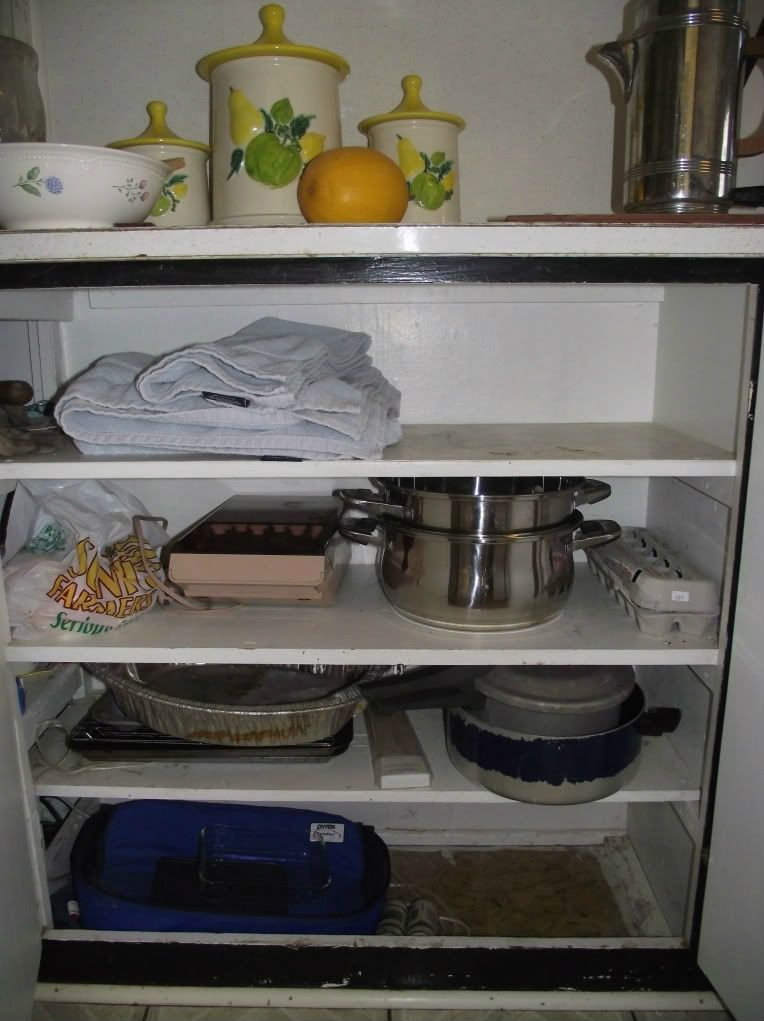
Over the holidays, I've been de-cluttering my house. Boxes of stuff went to Goodwill, bags of papers went to the shredder, cupboards were organized, and junk got tossed.

Getting rid of things I didn't need or enjoy was key, otherwise, I'd have wasted my time shuffling things from pile to pile and room to room and cramming things into closets and drawers. There's still more to do, but I'm seeing the benefits from what I've done: I'm more relaxed in my house and I'm more organized, which saves time. I don't spend as much time looking for things, and I'm less likely to buy something I already have.

Even though my house is only 800 square feet (74 square meters), I have plenty of room to work out and fix meals. The last owners, a husband and wife, moved to have more room for their stuff. A mutual friend said the husband ended up regretting selling this house, which had been his grandparents' home. Time was when parents raised their kids in houses this size (many still do). No doubt, it had something to do with young adults wasting no time moving out, and the rarity of 30-year-old offspring moving back in.

A few ideas I've used to organize the stuff I kept:
Unconventional places for storage. Towels and hot rollers don't have to go in the bathroom.
By keeping the fridge cleaned out, I don't have to run out and buy more food storage containers. 

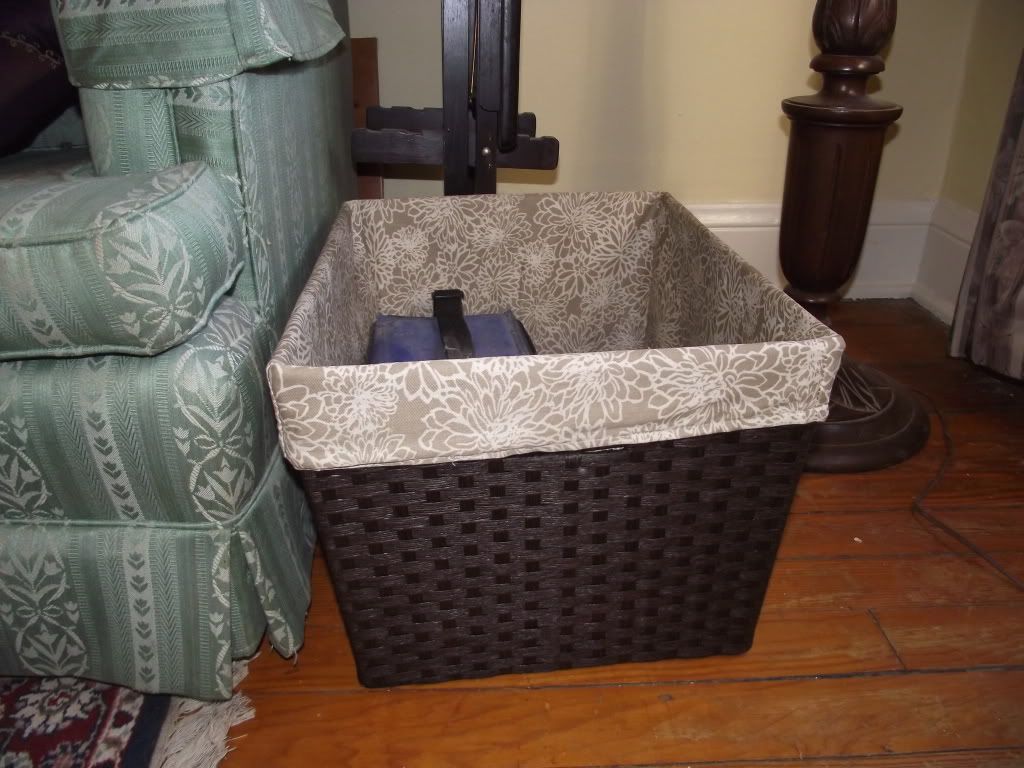
Beautiful containers where they'll be seen. This is where I store things to take to Goodwill.


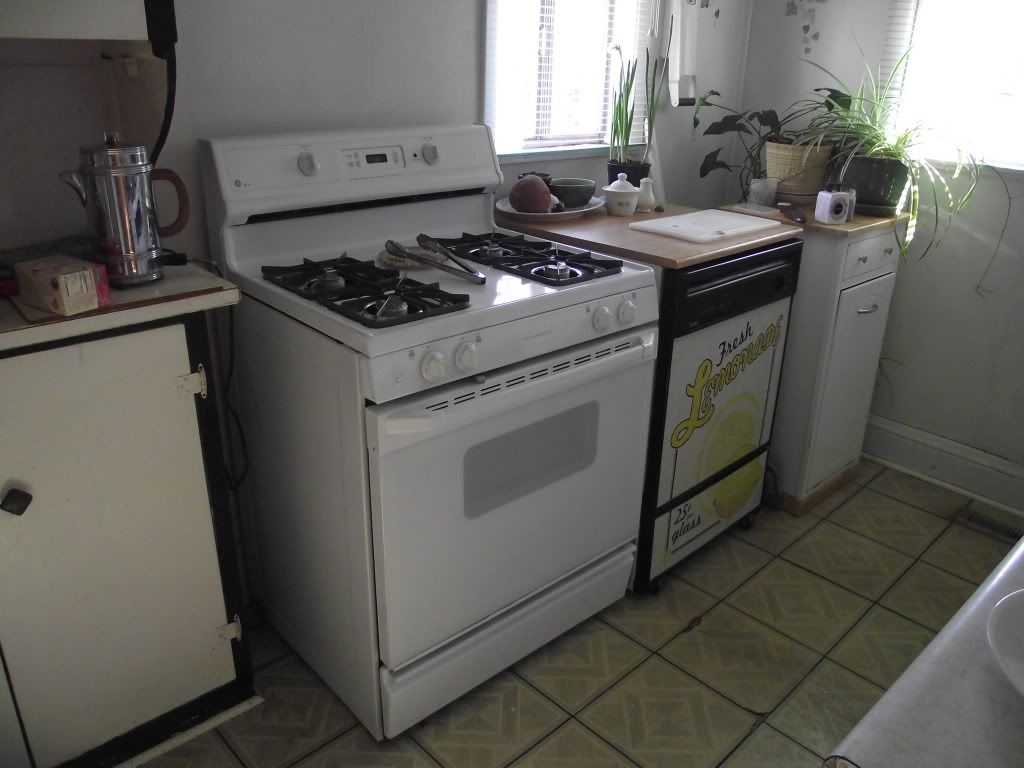
De-clutter the counters, and there's no need for a big kitchen. Ever wonder how chefs make enough food in a single car for a train full of people ? They must be organized.


My research and writing center...

Photobucket
...which is also my dog's gym.

Comments

Popular posts from this blog

Not Only Cheaper, But Easier

A while back, I wrote about saving money on break time coffee and snacks. I haven't done very well putting it into practice. But a post by James Clear today got me thinking about it again: Warren Buffett uses a two-list system to prioritize things. Check it out --and follow the instructions. Using Buffett's two-list system, two of the goals I ended up with were taking care of myself and saving $400 more per month than I already am. As I said, I've been wanting to save money, and the system made me really focus on this. I came up with 11 money-saving ideas, six of which had to do with food. Buying hamburger in bulk. Ranch Foods Direct sells one-pound packages of 80% lean pastured ground beef in bundles of 20 for a lot less than Whole Foods. Sprouts only carries super-lean beef that's grass-fed, and it's more expensive, too.  Not driving to Whole Foods. Whole Foods is out of my way, and saving a weekly trip saves gas. Coffee at home, tea at work. Tea is fr...

We Hate the ADA; Why does the Perfect Health Diet Get a Pass?

Some people keep touting the Perfect Health Diet as low-carb, but carb levels that are mostly in the triple digits aren't generally regarded as low-carb; in fact, one of the authors says low-carb diets are unhealthy. A lot of us hate the  American Diabetes Association's advice for diabetics: start with 45g to 60g of carbohydrate per meal and go higher or lower from there. That's 135g to 180g of carb. Perfect Health Diet advice for diabetics: eat 20% to 30% of your diet as carbohydrate. On 2,000 calories, that's 100g to 150g of carb. On 1,700 calories, that's 85 to 128g; on 2,200 calories, that's 112 to 168g. Depending on your carb and calorie intake, carbs would be 85g to 168g per day. That's not a mile off from the ADA's recommendations. Paul Jaminet, one of the authors of the Perfect Health Diet, says, "the basic biology here is that the body's physiology is optimized for a carbohydrate intake of about 30%." He warns against a ...

This Just In: Yogurt Doesn't Improve Health

A recent study from Spain finds "In comparison with people that did not eat yogurt, those who ate this dairy product regularly did not display any significant improvement in their score on the physical component of quality of life, and although there was a slight improvement mentally, this was not statistically significant," states López-García. Most yogurt is pretty much pudding with a little bacteria . Pudding is a sugar bomb. Hard to believe the stuff doesn't improve health outcomes, isn't it? But as usual, researchers are calling for...more research. "For future research more specific instruments must be used which may increase the probability of finding a potential benefit of this food."

Palpitations Gone with Iron

Thanks to my internet friend Larcana, who alerted me to the connection between iron deficiency and palpitations, I doubled down on my iron supplements and, for good measure, washed them down with Emergen-C. It's a cold medicine with a mega-dose of vitamin C, plus B vitamins and minerals. I don't think vitamin C does anything for a cold (a friend bought the stuff and left it at my house the last time she visited), but vitamin C does help iron absorption. After doubling up on iron in the last three days, I feel back to normal. (I'd already been taking quite a bit of magnesium and potassium, so I probably had sufficient levels of those.) How did I get so low on iron? Maybe it was too many Quest bars instead of red meat when I had odd cravings during my dental infection recently. Maybe because it's too hard to find liver at the grocery store and I haven't eaten much of it lately. Maybe the antibiotics damaged my intestines . And apparently, I'm a heavy bleeder . ...

My Long-Term Experience Eating Safe (and Other) Starches

Years ago, before the Perfect Health Diet came out, I followed a program that involved eating quite a bit "safe starch." It was called Body for Life. It involved eating six small servings of carbohydrate along with six small servings of protein, plus two servings of fibrous vegetables per day. (A serving was the size of your fist or the palm of your hand.) There were six workouts a week (three weightlifting, three cardio) and one free day every week where you ate whatever you wanted and didn't exercise. In all fairness, these two programs are different: BFL allows certain grains, legumes and low-fat dairy and discourages fat. It doesn't call for a wheelbarrow full of vegetation. Nevertheless, my experience eating lots of fruit and lots of starch is relevant to the PHD because the amount and type of digestible carbohydrates are similar, and for the first few years, I didn't eat wheat except on free days. At first on BFL, I felt great. Before, I was continually...